Working note
What AI is actually useful for in product work
The useful version of AI is usually less flashy than the demo reel. It shows up inside the
work itself, in sketching, testing, building, breaking, and trying again before the idea has
gone stale.
A small team can now move through the loop much faster: problem, thinking, judgment, solution.
The last step used to take months. Now the build can move much closer to the speed of thought.
Which sounds like a company slogan, and probably was one.
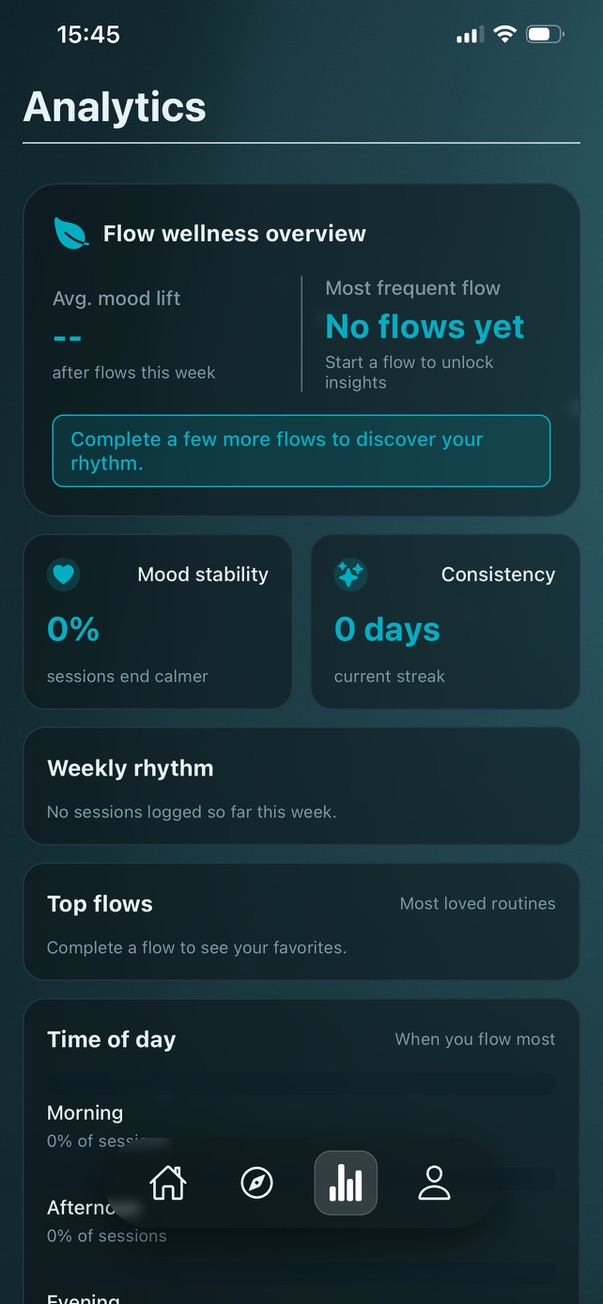
In Flow, AI helped us move from product intent to working screens much faster than we could
have alone. The product thinking still mattered most: why the first tap mattered, why the app
should ask less from someone precisely when they have less to give, and how to keep the human
friction underneath the interface in view.
This is where I think AI is useful. Product thinking and human judgment still sit at the centre
of the work, especially when the problem is deeply human. AI multiplies the build force, so the
real question shifts from whether I can technically make the thing to whether I am making the
right thing.
Thought in progress
The bakery software problem
A bakery looks romantic from the customer side. Warm light, good bread, little labels, the
whole civilised fantasy. Behind the counter, it is basically a live operations system with flour.
Orders arrive at different times. Dough needs fermentation windows. Some prep can happen the
day before, and some of it absolutely cannot. Ovens become bottlenecks. Staff capacity changes.
Waste is expensive. Being short on the wrong thing at 10:30 is expensive in a much more public way.
The product idea I keep coming back to is a planning layer that turns incoming orders, recipes,
prep steps, proofing times, oven slots, and daily workload into a schedule a real kitchen can
follow through the morning rush.
What I like about this problem is that it refuses to be solved by a nice-looking dashboard
alone. It needs product judgment, operational empathy, and enough technical structure to make
the invisible timing logic visible. With great bread comes great responsibility. Ideally,
responsibility the software can carry before the kitchen starts yelling.
Field note
Why I moved closer to the build
For a long time I was adjacent to building. Law teaches you to reason carefully. Inclusive
finance teaches you that systems touch people in uneven, practical ways. Investing teaches you
to look past the pitch and ask whether the product, market, team, and timing actually fit
together.
All of that mattered, and I kept feeling the same pull. I wanted to understand the decisions
from inside the work, especially the messy ones where you cannot hide behind a neat memo because
the screen either works or it does not.
AI made that shift feel newly possible. Nothing useful is ever magically easy, which is rude
but fair. The difference is that I can now notice a problem, shape a product around it, design
the experience, and build enough of it to learn from reality.
That is the thread running through this portfolio. I am still early in the craft, and I have
spent years caring about whether products make sense. I am moving closer to the build because
that is where the questions get sharper.